


Winter can be surprisingly tough on your home’s plumbing system. Freezing temperatures, ice dams and shifting soil all put stress on pipes and fixtures in ways you might not notice right away. Small cracks or loose joints often stay hidden until spring rains arrive or your household water usage picks up again.
That’s where spring plumbing maintenance comes in. A simple post-winter plumbing inspection helps you catch minor issues before they turn into expensive emergency repairs. Even a slow drip can waste thousands of gallons of water and drive up your utility bills if left unchecked. Taking time now to review your system can save you money and headaches down the road.
Comprehensive Plumbing Inspection Checklist
This plumbing inspection checklist gives you a straightforward way to review your home’s plumbing after winter. You don’t need to be an expert to spot warning signs. Taking a systematic approach helps you identify potential problems early and decide when it’s time to call in a professional. Set aside an hour or two on a weekend to walk through these steps, and you’ll have peace of mind knowing your plumbing is ready for the season ahead.
1. Check Your Sump Pump Before Spring Rains
Spring brings heavier rainfall, and you need a working sump pump to keep your basement from flooding. Test your pump by pouring a bucket of water into the pit. The pump should activate automatically, drain the water efficiently and shut off once the pit is empty. If it doesn’t turn on, runs continuously or makes unusual grinding or rattling noises, you may need repairs or a replacement before the next storm hits.
Clear any debris from the pit, including leaves, dirt or sediment that could interfere with the float switch. Check the discharge line to confirm water flows away from your foundation. If you have a battery backup system, test it to make sure it engages properly during power outages.
2. Inspect Outdoor Faucets and Spigots for Freeze Damage
Outdoor faucets take a beating during winter. Even if you drained and covered them in the fall, freezing temperatures can still cause hidden damage inside the wall.
Turn on each outdoor spigot and look for leaks, drips or unusually low water pressure. These are signs that a pipe may have cracked inside the wall during a freeze. You may want to repair or replace your outdoor spigots if you notice water pooling around the base of the faucet or hear hissing sounds when you turn the handle. Before connecting your garden hoses for the season, inspect them for cracks, splits or dry rot. Damaged hoses can burst under pressure and waste water.
3. Examine Exposed Pipes for Cracks and Leaks
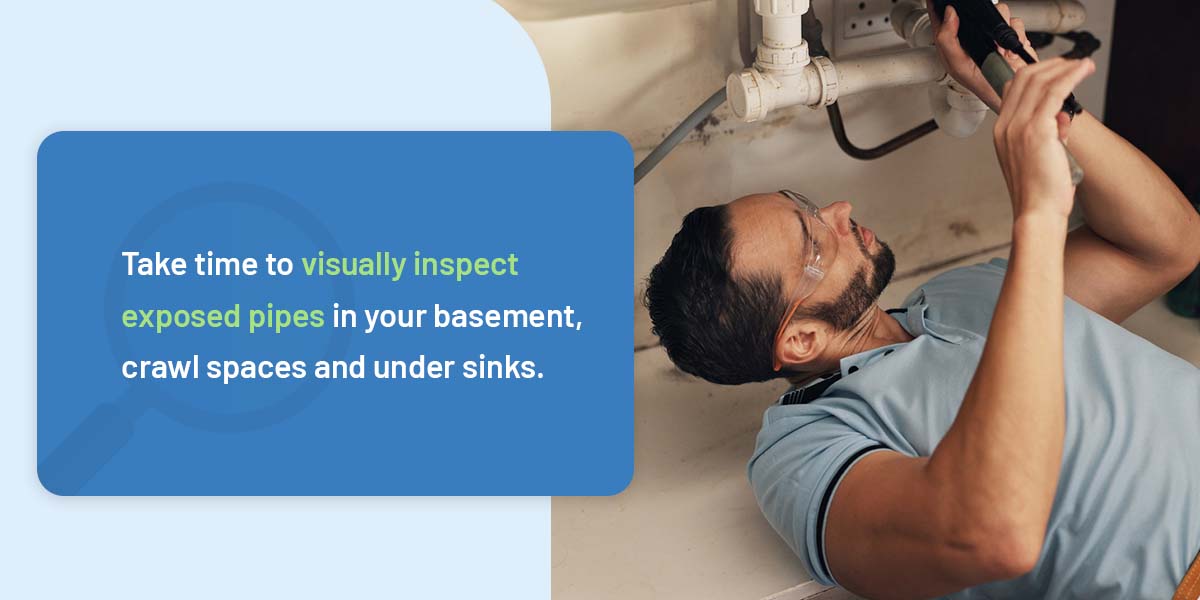
Take time to visually inspect exposed pipes in your basement, crawl spaces and under sinks. Winter temperature swings can cause pipes to expand and contract, which may loosen joints or create hairline cracks that don’t leak until spring water usage increases.
The most common signs of a leaky pipe include:
- Moisture or condensation around joints and connections
- Rust spots or corrosion on metal pipes
- Water stains or discoloration on nearby walls, ceilings or floors
- Warping or soft spots on wood surfaces near pipes
- Musty odors that suggest hidden moisture
Even a small drip can lead to mold growth, structural damage and higher water bills over time. Catching leaks early helps you avoid costly repairs later.
4. Test Your Water Heater Performance
Your water heater works harder during winter, and sediment can build up at the bottom of the tank. This buildup reduces efficiency and can shorten your water heater’s lifespan. Flush a few gallons of water from the drain valve at the bottom of the tank to clear out sediment. The water should run clear after a few minutes. If it stays cloudy or rusty, there may be significant buildup that requires professional attention.
You can also listen for unusual sounds, such as popping or banging. These noises typically mean sediment is interfering with the heating element.
Check around the base of your water heater for rust, corrosion or pooling water. These are warning signs that your tank may be developing a leak. Minor issues caught early can often be repaired, but waiting too long might mean you need a complete replacement, which impacts home plumbing costs significantly.
5. Clear Gutters and Downspouts to Prevent Foundation Issues
Clogged gutters and downspouts might not seem like a plumbing issue, but they can lead to severe water damage and basement flooding. When gutters overflow, water can pool around your foundation and seep into your basement or crawl space, forcing your sump pump or drains to handle more water than they’re designed for.
Remove leaves, twigs and debris from your gutters and downspouts. Make sure downspouts direct water at least 5 to 10 feet away from your home’s foundation. Use downspout extensions if needed to ensure proper drainage.
Check for sagging gutters or loose mounting brackets that may have shifted during winter. Gutters should slope slightly toward downspouts to prevent standing water. If you notice rust spots or holes in metal gutters, consider repairs or replacement to maintain proper water flow.
When to Call a Professional for Help
While following a spring plumbing checkup guide can help you spot obvious problems, some issues require professional tools and expertise. For example, deep cracks in sewer lines, complex water heater malfunctions and hidden leaks behind walls aren’t visible during a basic inspection. A licensed plumber has specialized equipment, such as video inspection cameras and leak detection tools, that can identify problems you can’t see. They can also assess whether your plumbing system needs repairs or replacements based on the age and condition of your pipes and fixtures.
Professional inspections can also help uncover issues that homeowners miss during routine checks, such as:
- Slow drains throughout your home may signal a problem with the main sewer line.
- Fluctuating water pressure could point to a hidden leak or corroded pipes.
- Water discoloration or unusual odors may indicate contamination issues that need immediate attention.
Working with a reliable local plumber is important to catch invisible problems early and avoid emergency repairs, water damage and the stress of dealing with plumbing failures during peak usage times.
Let Us Help You With Your Post-Winter Plumbing Checkup and Maintenance

At GreenBox Heating & Air, we offer plumbing maintenance services to keep your system running smoothly, and if we find any issues, you can count on our reliable plumbing repair services to get things fixed fast.
Want to stay ahead of problems year-round? You get ongoing protection for your plumbing system and enjoy priority scheduling, discounts and many other perks with our Care Plan Maintenance Membership. Call us at (859) 278-0281 or contact us online to learn more from our experts today.