


Nobody enjoys spending money on a furnace, especially when the one they already own is still working. Maybe it’s making a strange noise, struggling to keep the house warm, or needing another repair. You could fix it and hope for a few more winters, but how much money should you keep putting into an aging heating system?
It’s a decision homeowners throughout Lexington and Central Kentucky eventually face. At GreenBox Heating & Air, we help you understand whether another repair makes financial sense or if replacement is the better investment. If you’re considering upgrading, our HVAC Installation Cost Guide explains what different furnace options cost.
Call (859) 203-5124 to schedule an evaluation and get answers about your heating system.
Should You Repair or Replace Your Furnace?
Repairing your furnace generally makes sense when it’s relatively new, has a dependable track record, and needs an inexpensive fix. Replacement becomes more practical when the equipment reaches 15 to 20 years old, requires frequent repairs, or needs work approaching 50% of replacement cost. Serious safety concerns, including a cracked heat exchanger, may also make replacement the better option. Your furnace’s overall condition matters more than age alone.
Furnace Repair vs. Replacement: A Quick Comparison
Before committing to another repair, consider how your furnace compares across these important factors.
| Factor | Repair Your Furnace | Replace Your Furnace |
|---|---|---|
| System Age | Under 10 years old | 11–15+ years with declining performance |
| Repair Cost | Inexpensive compared to replacement | Approaches 50% of replacement cost |
| Reliability | Few previous breakdowns | Frequent repairs or recurring issues |
| Component Failure | Thermostat, sensor, or minor component | Major failure, such as a damaged heat exchanger |
| Efficiency | Consistent performance and heating costs | Increasing energy consumption and reduced efficiency |
These guidelines aren’t absolute. A 17-year-old furnace might justify an inexpensive repair, while a newer system with extensive damage could be better off replaced.
Four Factors That Help You Decide Whether to Repair or Replace
1. Furnace Age: How Much Life Is Really Left?
Most residential gas furnaces last approximately 15 to 20 years, although maintenance, installation quality, and usage affect their lifespan. A five-year-old furnace needing an igniter replacement is a different situation from a 16-year-old system requiring its third significant repair.
Once a furnace passes 10 to 15 years, it’s worth paying closer attention to its condition. That doesn’t mean replacement is immediately necessary. However, older equipment deserves a more careful evaluation before investing in expensive repairs.
In established Lexington neighborhoods such as Kenwick and Chevy Chase, homes may have heating systems installed during previous renovations. Equipment age isn’t always obvious, and ductwork or venting modifications can complicate replacement. A technician can identify the furnace’s age and help determine whether the existing setup still meets your home’s heating needs.
2. The 50% Rule: Know When Repairs Stop Making Sense
Imagine your furnace needs a $2,800 repair, but replacing it would cost $5,500. You’re considering spending more than half the cost of a new system to keep older equipment operating. If the furnace is already approaching the end of its expected lifespan, replacement deserves serious consideration.
The 50% rule is a useful guideline, but don’t evaluate the latest estimate in isolation. Suppose you’ve already spent $600 on a blower repair and $450 fixing an ignition problem. Now you’re facing another $1,500 repair. That’s $2,550 in expenses over a few heating seasons, without necessarily improving the condition of other aging components.
Before approving another substantial repair, ask yourself:
- Repair history: How much have you spent on furnace repairs during the past two or three years?
- Equipment condition: Is this an isolated failure, or are other major components showing wear?
- Long-term value: Would replacement provide better reliability and lower operating expenses?
GreenBox’s furnace installation pricing guide lists Good, Better, and Best equipment options starting at $5,000, $7,000, and $9,000. Published financing examples begin at $66 per month for qualified customers, subject to financing terms. Your actual installation cost depends on equipment selection and your home’s requirements.
3. Safety: Some Problems Deserve Immediate Attention
A malfunctioning thermostat or worn ignition component may be relatively straightforward to repair. Damage involving combustion or exhaust components requires greater caution.
A cracked heat exchanger is particularly serious because it can create a pathway for combustion gases, potentially including carbon monoxide, to enter your home’s circulating air under certain conditions. If a technician confirms a crack, the furnace should remain off until the problem is properly resolved.
Replacing the heat exchanger may be possible, especially on newer equipment with warranty coverage. However, replacing the entire furnace often makes more financial sense when the system is older and has additional wear.
Never ignore suspected gas leaks or carbon monoxide alarms. Leave the building immediately and contact emergency services or your gas utility from a safe location.
4. Efficiency: Is Your Old Furnace Costing More Every Winter?
Sometimes an aging furnace continues working without an obvious breakdown. Instead, you notice higher heating bills, longer operating cycles, or rooms that never seem comfortable.
An older furnace rated at 80% AFUE converts approximately 80% of its fuel’s energy into useful heat under standardized conditions. A newer 96% AFUE system converts a greater percentage, potentially reducing fuel consumption when replacing less efficient equipment.
However, higher utility bills don’t automatically mean you need a new furnace. Dirty components, airflow restrictions, thermostat problems, and insulation deficiencies can also affect heating expenses.
For Lexington homeowners, proper equipment sizing is another important consideration. Whether you live in an older home near downtown or a newer development outside New Circle Road, replacement equipment should be sized according to your home’s heating requirements. Installing an oversized furnace can cause short cycling and uneven comfort, even when the equipment itself is new.
What Should You Check Before Making Your Final Decision?
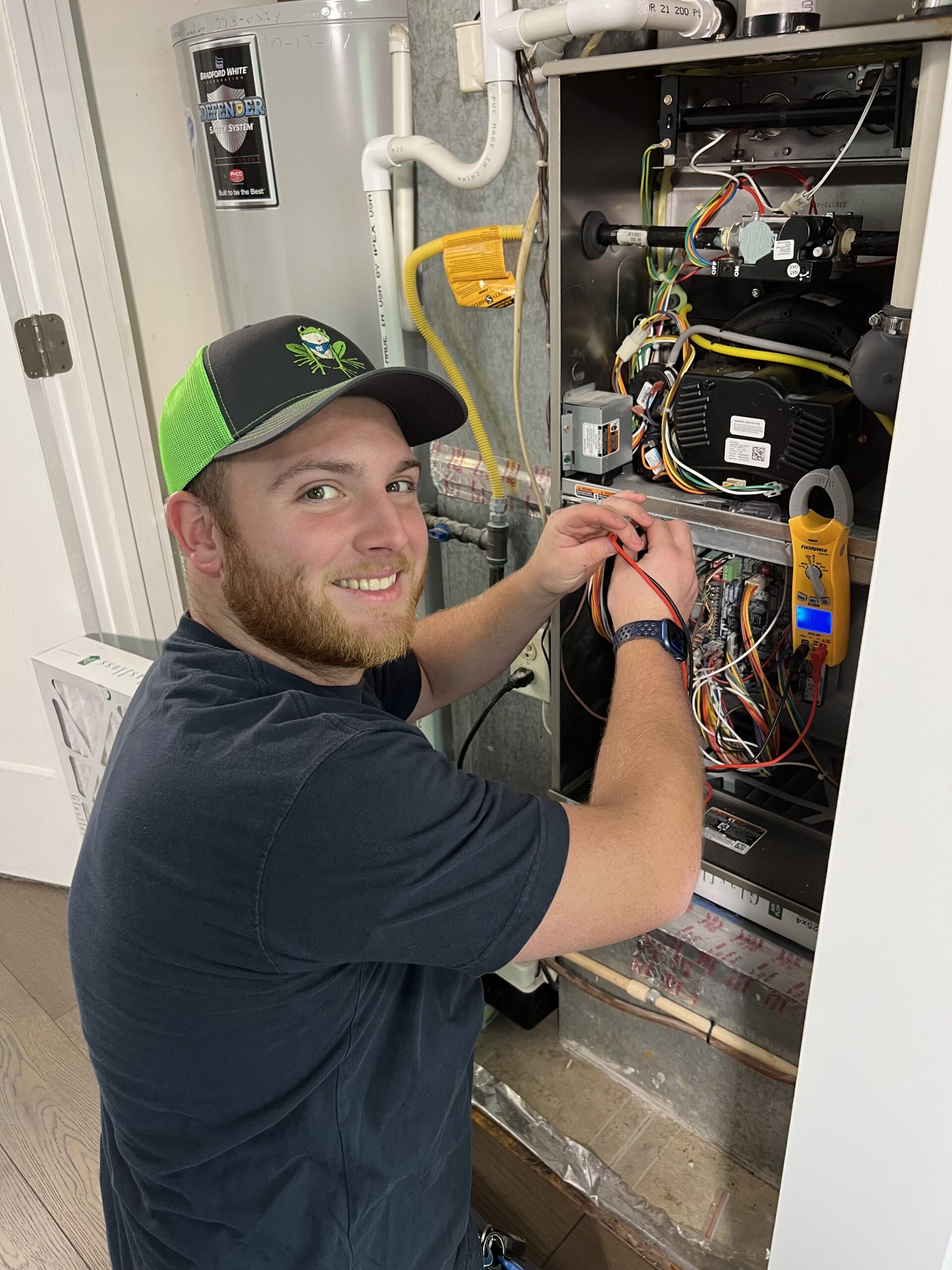
Before approving an expensive repair or purchasing replacement equipment, have a qualified technician inspect your complete heating system. Understanding the cause of the problem helps you avoid making decisions based on one failing component.
GreenBox Heating & Air provides upfront pricing, free in-home replacement estimates, and NATE-certified technicians. We can evaluate your equipment, explain repair options, and help determine whether replacement offers better long-term value.
If you choose a new furnace, installation requirements may affect the final cost. Gas piping, venting, condensate drainage, and ductwork modifications can all influence the investment. GreenBox’s 365-day satisfaction guarantee on qualifying installations also provides additional confidence when purchasing new equipment.
Frequently Asked Questions About Aging Furnaces
Is it worth repairing a 15-year-old furnace?
Yes, if the repair is inexpensive and the equipment has been reliable. However, repeated breakdowns or major component failures may make replacement more economical.
How much is too much to spend on furnace repairs?
When a repair approaches 50% of replacement cost, compare both options carefully. Consider the furnace’s age, maintenance history, and likelihood of additional repairs.
Should I replace my furnace before it breaks down?
Not necessarily. However, planning replacement before a complete failure allows you to compare equipment, evaluate costs, and avoid making a rushed decision during freezing weather.
Get the Right Answer for Your Furnace With GreenBox Heating & Air
An older furnace isn’t automatically a bad furnace. Sometimes an affordable repair can provide several more years of dependable heating. Other times, another expensive repair only delays an inevitable replacement.
GreenBox Heating & Air helps homeowners throughout Lexington, Georgetown, Nicholasville, and surrounding Central Kentucky communities understand their heating options. Our technicians can explain what’s wrong, discuss the available solutions, and help you make a decision that fits your home and budget.
Before spending money on another major repair, find out whether your furnace is worth fixing. Call GreenBox at (859) 203-5124 or schedule a heating service appointment to get a professional evaluation and clear recommendations.