


Lighting has come a long way since Thomas Edison patented the first incandescent light bulb in 1880. Back then, simply having an electric light source was revolutionary. Today, we expect lighting that’s stylish, sustainable, and smarter than the inventor himself.
Energy-efficient lighting has changed the way we see our spaces, literally. The right lights can cut costs and care for the planet, all while creating the perfect ambience. Curious about how a simple light bulb swap can make such a glowing difference? Let’s flip the switch on the perks of energy-efficient lighting.
The High and Lowlights of Light Bulb Types
Get ready for the science bit! Before shedding light on energy-efficient bulbs, let’s compare the different lighting options:
Incandescent and Halogen Bulbs
Edison’s original incandescent bulb has lit the world for over a century. It works by passing electricity through a tungsten filament, causing it to glow. These bulbs generate about 90% of their energy as heat. Halogen lights are a slightly more efficient type of incandescent bulb. In 2007, the U.S. Department of Energy (DOE) began phasing out inefficient incandescent bulbs.
Compact Fluorescent Lamps (CFLs)
CFLs feature argon and a tiny amount of mercury inside a spiral tube. Electric current passes through the tube, producing invisible ultraviolet (UV) light. The UV activates a fluorescent coating inside to create visible light.
These bulbs use around 70% less energy than their incandescent counterparts. They also have around an 8-15 times longer lifespan.
Light-Emitting Diodes (LEDs)
LEDs are the shining stars of energy-efficient lighting. Compared to incandescent bulbs, LEDs use around 90% less energy and last 25 times longer. They work by passing an electric current through a semiconductor material. The current agitates the electrons, releasing visible light energy as photons.
Illuminating Energy-Efficient Lighting Advantages
Making sustainability upgrades at home or cutting business costs? Consider these LED lighting benefits:
1. Same Light, Less Spend
According to the DOE, lighting accounts for around 15% of electricity use in U.S. homes. Switching to LED bulbs can save up to $225 per year on energy bills. LEDs may cost more than incandescent bulbs, but their long lifespan and low energy consumption make them cost-effective lighting solutions. Since they last longer, you can replace them less often than traditional bulbs.
You might even get some cash back for upgrading your lights. Look for local or federal rebates to offset energy-efficient lighting installation costs.
2. Glow Green With Eco-Friendly Lighting Options
If you love the planet (and we know you do), switching to LED lighting is a responsible choice. The green perks of these bulbs include:
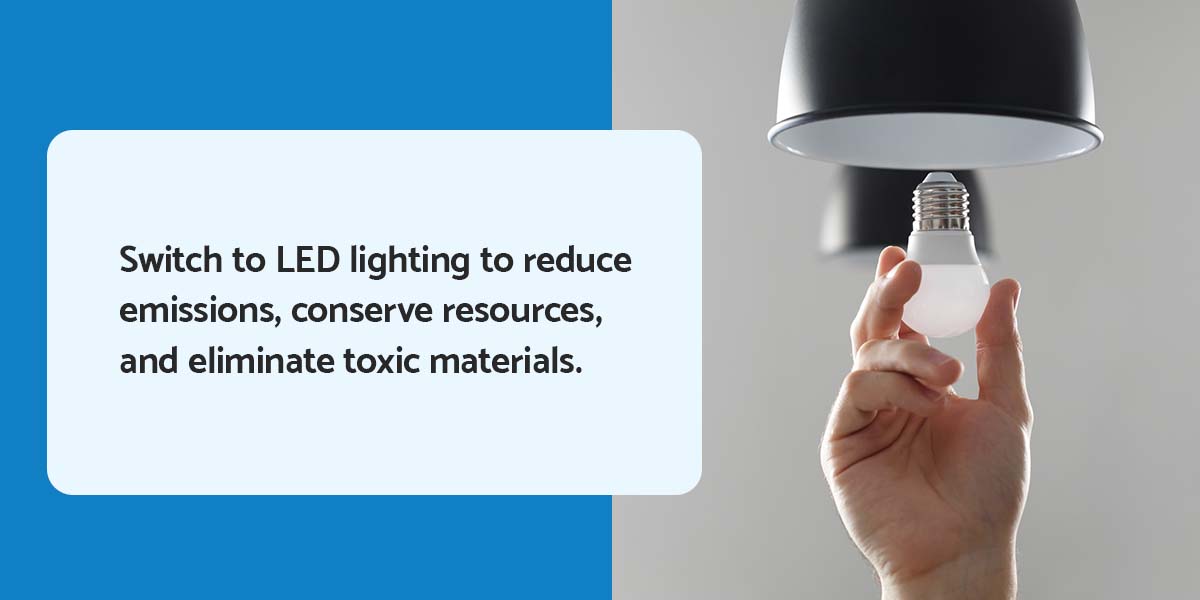
- Fewer emissions: Generating electricity from coal or gas produces carbon dioxide. Using LED or CFL lights shrinks greenhouse gas emissions and your carbon footprint.
- Resource conservation: LED light bulbs lighten the load on finite natural resources. Their longer lifespan also means fewer replacements and less landfill waste.
- Non-toxic materials: An LED bulb contains no mercury or other toxic substances. Disposing of these lights is far kinder to the environment than conventional bulbs.
For over 25 years, consumers have looked for the ENERGY STAR certification as proof of energy efficiency. Today’s LEDs are so efficient that they no longer need the label.
3. Highlight Your Home’s Style
Beyond cost and energy savings, LEDs can transform your property’s look. They offer ultimate customization. Adjusting the color, temperature, or brightness lets you create the perfect mood. Use a warmer glow for an inviting living area. Amp up visibility with focused task lighting to illuminate workspaces or kitchen counters. LED bulbs make ideal accent lighting for that treasured artwork. It puts the design power in your hands.
4. Turn Property Safety Up
Sparks should fly, but not from your light bulbs. Incandescent and CFL bulbs produce most of their energy as heat. LED lighting generates only a small amount of heat, so it looks and feels cool. The heat dissipates, saving you from burnt fingers when changing your light bulb. Bright LED lights along outdoor paths, hallways, and staircases can also prevent falls.
5. Dial Maintenance Needs Down
Energy-efficient LED bulbs are the gift that keeps on glowing. They last 25 to 50 times longer than their incandescent counterparts. Their longevity makes changing bulbs a rare event rather than a regular chore. Lower upkeep means less time spent on rickety ladders. It can also shave valuable minutes off maintenance schedules for property managers.
6. Enjoy a Lighter, Smarter Home
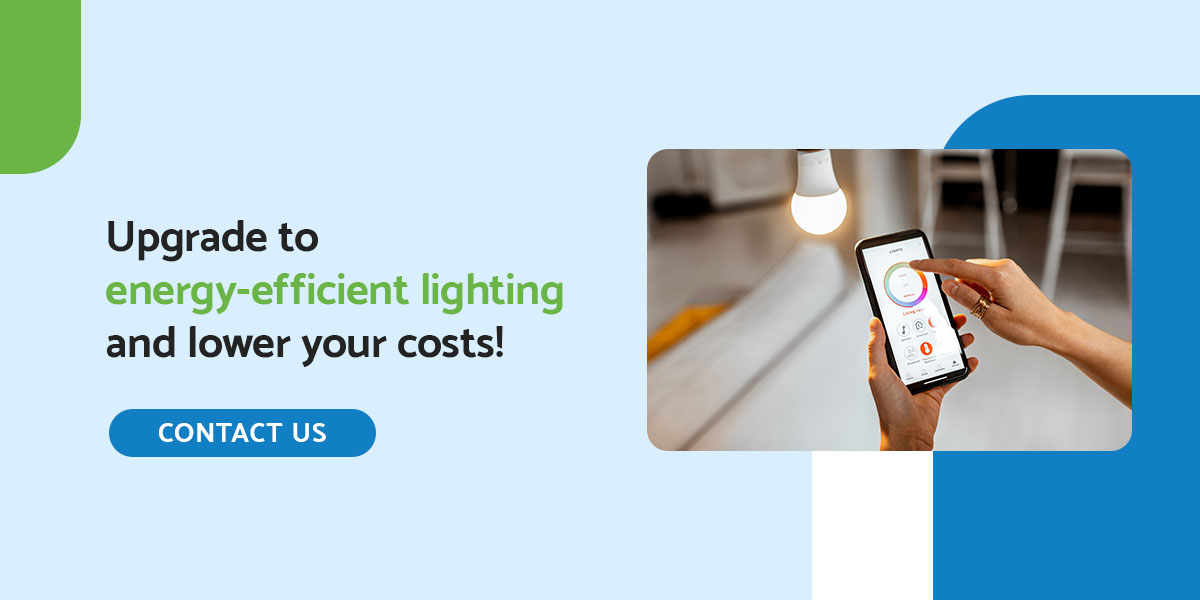
Using a switch to operate your lighting is so early-2000s. Smart LED lights integrate with your smart home system for ultimate control. With a phone tap or voice command, you can switch the ambience from “Zoom meeting ” to “romantic dinner” in seconds. Customize color and brightness to create the right mood.
Remote access means never worrying about leaving the lights on again. Experience greater security, energy savings, and convenience all in one clever bulb.
Bright Ideas for Choosing the Perfect Energy-Efficient Lighting
Ready to illuminate your home or business with energy-efficient lighting? These tips can help you choose the ideal LED light bulbs:
- Check compatibility: Before installing LED lights, assess your existing lighting fixtures. The new bulbs should fit the physical sockets. Dimmer switches need dimmable LEDs and a compatible switch, like a trailing-edge dimmer. The LED must fall within the dimmer’s minimum and maximum load range.
- Look at the lumens: LED light bulbs measure brightness in lumens. A 1,600-lumen LED bulb is around the same brightness level as a 100-watt incandescent bulb. Choose higher lumens for focused task lighting or 800 to 1,100 lumens for a softer glow.
- Meet Kelvin: No, Kelvin isn’t the shop assistant at your local lighting store. Kelvin (K) measures the color temperature of LED bulbs. Lower K values around 2,200K to 2,700K offer warmer tones, like yellows and oranges. Higher values between 3,000K and 5,000K give cooler white or blue hues. Think of the ambience you want to create.
- Consider the color quality: Lighting an object can change its color appearance. An LED bulb’s Color Rendering Index (CRI) measures color accuracy from 0 to 100. The higher the CRI number, the more accurate the color.
- Ace your base: LEDs come in various shapes and base types. Make sure you choose the right base and shape to fit your existing light fixtures.
- Consult a lighting expert: DIY is great for painting walls, but leave wiring to the pros. Let an electrician take the limelight. They make your lighting project safe and seamless, leaving you to bask in the LED glow.
Call Us to Light the Way to Energy Efficiency
Make the smart switch with GreenBox Home Services. We help you upgrade to energy-efficient lighting that makes your property glow while keeping costs low. Our central Kentucky experts deliver professional installation and peace of mind. From smart LED lighting integration to whole-home rewiring, we do it all.
See your home or business in a new light! Call us at 859-927-3246 to discuss your needs or book your consultation today!